
Author – Awadhesh Sharma
The term Hindutva is formed from the root word Hindu. Initially, the word Hindu denoted the inhabitants of India. Subsequently it became a synonym for the followers of Hinduism, the religion of the Hindus. Hinduism is the distorted translation of the religion of Hindus, which was called Sanatan Dharma or Eternal Way of Living.
Hindutva means the characteristics of Hindus or Hinduness.These characteristics differ according to the sense for which the word Hindu is used i.e. inhabitants of India or followers of Hinduism.
During the foreign occupations, local inhabitants of India were subjected to mistreatment, manipulation and discriminations. Their religion, language and culture were denigrated. Foreign missionaries and campaigners, mostly with the support of administrative institutions, and deceptions, converted people into imported religions.
Using the policy of “divide and rule”, foreign rulers promoted the division of society on the basis of caste, creed, region and sects. That policy served their objectives well but it was detrimental to the welfare of Indians.
Local Indian leaders, educated patriots and social reformers realised the rulers’ machinations and worked to oppose them. They turned to ancient Indian civilisations for inspiration. Ancient Hindus had developed great civilisations, which are described in countless books. The remains of these civilisations have also been uncovered through archaeological explorations.
It was considered relevant to delve into the characteristics of Hindus, who had developed those civilisations, to understand the extent of their accomplishments and interpret them for use in the context of a contemporary nation. Scholars and experts reviewed Indian history and wrote books and articles that suited their purpose. Treatises on Hindutva were also issued from both religious and civilian perspectives.
A prominent writer Chandranath Basu (1844-1910) from Bengal wrote his book in Bengali ‘Hindutva – Hindur Prakrita Itihas’ in 1892. The title is translated as ‘Hindutva – Natural History of Hindus’. It was centred on the Advait Vedant philosophical aspects of Hinduism.
It combined a variety of traditional beliefs and practices under a common group. He expounded the greatness of Hindu religion and its tradition in an attempt to discourage the people from conversion to alien religions.
Another major proponent of the concept of Hindutva was Vinayak Damodar Savarkar. He expounded his theory of Hindutva in the prevailing context of contemporary nations. It was designed to unite the people of India, using an ancient concept of the nation of Hindus. It is his notion of Hindutva that became a beacon of hope for a large section of nationalists in India during colonial rule.
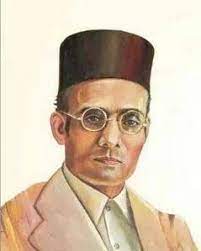
Savarkar was a freedom fighter, politician and writer. He was born in a village near Nasik in Maharashtra on 28 May 1883. He began his political activities as a high school student and continued to do so at college in Pune.
Due to his spirited political activities, the colonial government implicated him in serious crimes and sentenced him to 50-years imprisonment. He was transported to the Andaman Nicobar Islands and imprisoned in the Cellular Jail in July 1911.
He was aware of the political environment of his time and had witnessed religious unrests in various parts of the country. He realised that Hindus were especially depressed. He was familiar with the Vedic tradition and history of Hindu kingdoms, and was dismayed by the status of his contemporary Hindus, who were divided into various castes and sects.
During his incarceration in the cellular jail, he framed the definition of a Hindu in the following Sanskrit couplet.
Aasindhu Sindhu Paryanta, Yasya Bharat Bhumika;
Pitribhuh Punyabhu-shchaiva, Sa Ve Hinduriti Smritah.
“Those for whom Bharat Bhumi, the area from the Sea to Sindhu, is Fatherland and Holy land are known as Hindus.”
In the cellular jail, he did not have access to paper and pencils, but had learnt the technique of inscribing on prison walls with a pointed pebble or thorn, without being detected by authorities. He scribbled his ideas on walls and used to remember them by rote.
In May 1921, Savarkar was transferred to a jail in Ratnagiri, Maharastra. In the prison, he came into contact with other political prisoners who had access to writing materials. Despite being confined and isolated as a revolutionary prisoner, he could manage to get real paper and pencils.
He expanded his ideas on Hindutva and completed a treatise titled ‘Essentials of Hindutva’ in 1922, in the jail. The text was smuggled out undetected by jail officials and published in 1923.
The book became so popular that well-known Indian leaders of the time including Pandit Madan Mohan Malaviya and Lala Lajpat Rai hailed it as amongst the most original and scholarly contributions to the Hindu ideology.
In January 1924 Savarkar was released from jail but was confined to Ratnagiri district. He became a prolific writer and wrote a number of books. In 1937 he was unconditionally released from internment in Ratnagiri. He worked to consolidate the Hindu community.
Savarkar became the president of Hindu Mahasabha, a political party. After Indian independence, he continued addressing social and cultural elements of Hindu society until his death in February 1966.
Savarkar’s concept of Hindutva forms the basis of Hindu or Indian nationalism. He was an atheist and pragmatically practiced Hindu philosophy. He differentiated Hindutva from Hinduism. Hinduism as a religion is only a part of Hindutva.
He offered a new direction in understanding the development of the Indian nation in his book on Hindutva. He started his book with a discussion on the importance of a name. A name relates a person, place or thing to their past. The past is the source of inspiration for progress.
Then he defines what is a Hindu. He refers to ancient texts and relates the word Hindu to Sindhu. Sindhu or Indus is the name of a river of the western region of ancient India, now Pakistan. The river Sindhu originates around the Mount Kailash in Tibet and discharges into the Arabian Sea. Another major river named Brahmaputra also originates in the same region. It flows toward the east and finally enters into the Bay of Bengal. Hindu texts highlight Sapta-Sindhu, or seven rivers, which are considered sacred. The term Sindhu also means the Sea in Sanskrit.
Earlier, it was understood that Hindu was a Persian word and Persians referred to the inhabitants of the land beyond river Sindhu by name Hindu. Savarkar disagreed with the notion of outsiders labelling Hindus. He maintained that the inhabitants of the areas called themselves Hindu relating the word to Sindhu, the rivers and seas that encircled their land.
The term Hindu is the Prakrit pronunciation of the Sanskrit word Sindhu. Common people in ancient India used the Prakrit language for communication. Only educated persons used the Sanskrit language. Even now in some Prakrit expressions, S is pronounced H. Common examples are Keshari to Kehari used for a lion, Saptah to Hapta for a week. Old Prakrit language has evolved into modern regional languages of India.
This identity of Hindus was further spread by residents of neighbouring countries, local and foreign traders and visitors. The land became known as Hind, Hindustan, Bharat or India. Their religion Sanatan Dharma became popular as Hinduism, the religion of Hindus. Savarkar offered various examples of use of these words in written texts by numerous ancient and medieval writers, poets, and political and social leaders.
Savarkar formulated the concept of Hindutva in the prevailing national and international contexts that contained certain elements:
The first element of the Hindutva is geography.Since the Vedic period, India has distinct geography, physically bounded by seas, rivers and mountains. Its inhabitants regarded the land as their fatherland or the land of ancestors and Punyabhumi or the holy land.
The second element is the population with a common bond of blood. The Indian population has been inter-mixing from ancient times. Indian literature contains numerous stories that describe the union of males and females of different Varna or social statuses.
Anulom and Pratilom marriages were not uncommon. Anulom refers to a male marrying a female of lower social status and Pratilom denotes a female marrying a male of lower social status.
A large number of modern castes demonstrate the existence of common blood. It also applies to mixing and conversion of people from one to another religious beliefs. Buddhists, Jains, Sikhs and Hindus have been doing so since their beginnings.
The third element is the common culture or Sanskriti.It relates to the Sanskrit language, which has been the means of expression and preservation of all that was the best and worth preserving in the history of the inhabitants. It includes common laws and rites for inhabitants of the land. In the long term, it is identified as civilisation of the people.
Savarkar regarded all inhabitants of India, who followed religions that originated in India, as Hindu. He assumed that they had common blood and common culture and they accepted India as their fatherland and holy land. He expressed concerns about some followers of imported religions. Events of his time had made him believe their loyalty to India divided and not unconditional.
His doctrine of Hindutva deals with social and political matters. Originally, the Rastriya Swayamsevak Sangh (RSS) had adopted the Hindutva theory to empower the Hindu community in India. Subsequently, it had modified to make it relevant for all sections of Indian society.
A number of people in India and abroad consider Hindutva to have a sectarian agenda, relating it to the Hindu religion. Political parties criticise RSS and Bharatiya Janata Party (BJP) for their support of the Hindutva philosophy. BJP is a national political party with policies on many social and national issues aligned with that of RSS.
India has made notable progress in many spheres of life during the BJP rule in recent years. Achievements made by the BJP led government in India have made Hindutva an international topic of discussion.
Conferences such as ‘Dismantling Global Hindutva’ and ‘Hindutva for Global Good’ have been held recently in the USA with the support and collaboration of a number of overseas universities and educational institutions.
Foreign opponents of Hindutva try to emphasise divisions in the Indian society, especially on the basis of religion. Religious differences between Hindus and Muslims had been used as a source of conflict in the past. Groups with vested interests try to activate religious sentiments with intention to achieve their own objectives.
National opponents of Hindutva use it for their political gain in the country. Sometimes, they play into the hands of foreigners who use them as a tool to serve their interests.
Proponents of Hindutva relate it to economic, cultural and social development of India. Hindutva promotes national cohesion, uniformity in social thinking, patriotism and cultural development.
Statements of the RSS chief summarise the arguments of the proponents of Hindutva. He recently said that Hindus and Muslims were not different and they are descendants of the same ancestors. According to him, Hindutva is a common denominator for all Indians and not related just to a single caste, sect, or identity. RSS considers that the word Hindu expresses Indian identity along with the continuity of its spirituality-based traditions and its entire wealth of value system of the country.
It asserts that Hindu is the word applicable to all people of India who call themselves Indian. Hindu is not the name of some sect or denomination. It is not a provincial concept, and it is neither a single caste’s lineage nor the privilege of the speakers of a specific language. It is that psychological common denominator whose vast courtyard cradled human civilisation that honours and encompasses innumerable distinct identities.
The three elements of Savarkar’s Hindutva remain valid for India as well as for other modern nations. Close scrutiny of the system of governance of developed nations confirmed their validity.